Spring Reactive는 비동기적이고 논블로킹(Non-blocking) 방식으로 데이터를 처리하는 방법을 제공하는 Spring의 기능입니다. 주로 Spring
WebFlux라는 모듈을 통해 구현되며, 이는 서버 응답의 지연 시간을 줄이고 높은 동시성을 처리할 수 있도록 돕습니다.
비동기처리
    @GetMapping("rest")
    public Mono<ResponseEntity<String>> rest(@RequestParam int idx) {
        String url = "/service?req={req}";

        // 첫 번째 요청 보내기
        return webClient.get()
                .uri(url, "rest" + idx)
                .retrieve()
                .toEntity(String.class)
                .flatMap(response -> {
                    // 첫 번째 요청이 성공하면, 두 번째 비동기 요청 처리
                    String res = response.getBody();
                    log.debug("First request succeeded: " + res);

                    // 두 번째 서버와의 비동기 요청
                    return sendSecondRequest(response.getBody())
                            .flatMap(secondResponse -> {
                                // @Async 메서드 호출하여 비동기로 combinedResponse 생성
                                return Mono.fromFuture(innerService.createCombinedResponseAsync(response.getBody(),
                                        secondResponse.getBody()));
                            })
                            .map(combinedResponse -> ResponseEntity.ok(combinedResponse));
                })
                .doOnTerminate(() -> {
                    // 첫 번째 요청이 완료되면 실행
                    log.debug("First request completed!");
                })
                .doOnError(error -> {
                    // 첫 번째 요청이 실패하면 처리
                    log.debug("First request failed: " + error.getMessage());
                });
    }
InnerService
    @EnableAsync
    public static class InnerService {
        @Async(value = "tp")
        public CompletableFuture<String> createCombinedResponseAsync(String firstResponse, String secondResponse) {
            log.debug("call createCombinedResponseAsync.... on thread: " + Thread.currentThread().getName());
            String combinedResponse = "ASYNC WORK >> " + firstResponse + " |||| " + secondResponse;
            return CompletableFuture.completedFuture(combinedResponse);
        }
    }
Thread Pool
	@Bean
	ThreadPoolTaskExecutor tp() {
		ThreadPoolTaskExecutor te = new ThreadPoolTaskExecutor();
		te.setCorePoolSize(1); //첫 요청이 들어오면 10개의 쓰레드를 만들어둠
		te.setMaxPoolSize(1);  // queue가 꽉차면 추가적으로 늘어나는 쓰레드 수 즉, 최대쓰레드 200 + 100
		//te.setQueueCapacity(200);
		te.setThreadNamePrefix("Woo-Thread");
		te.initialize();
		return te;
	}
Mono, Flux
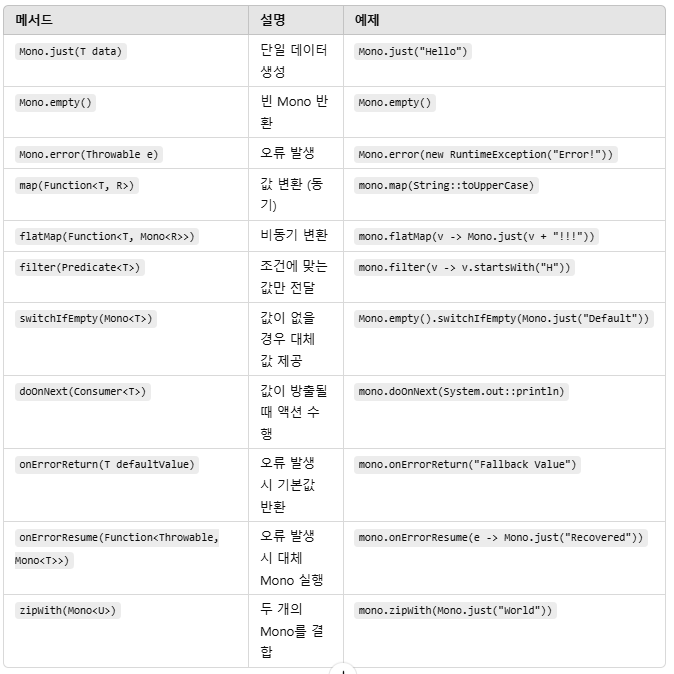
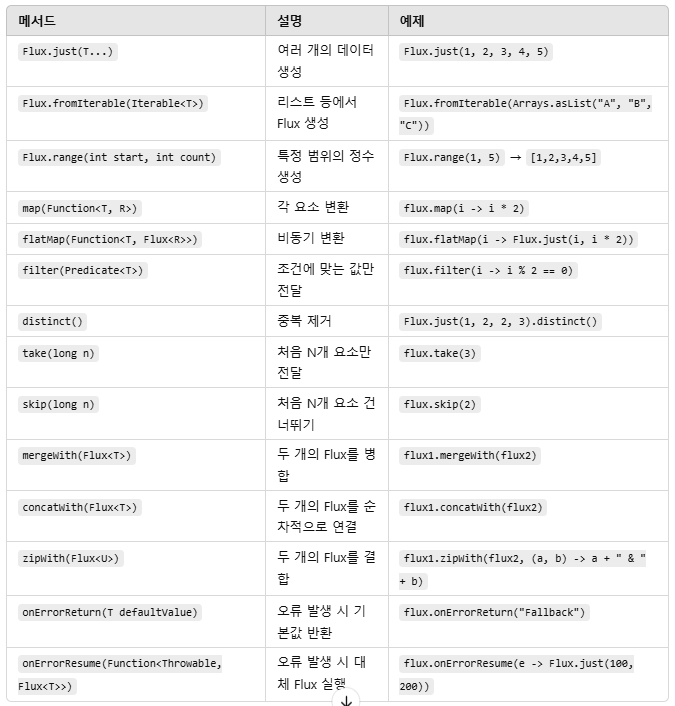
`Mono<T>`와 `Flux<T>`는 Spring WebFlux에서 리액티브 스트림을 다룰 때 사용되는 기본적인 타입이며, 다양한 연산자를 제공합니다
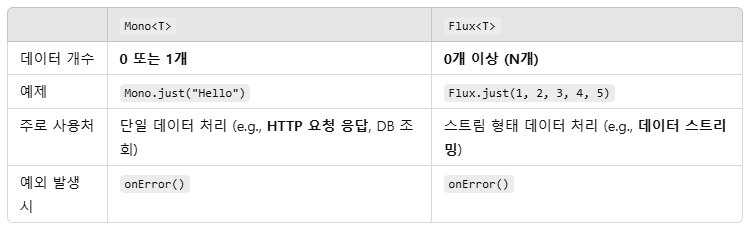
`Mono`의 주요메소드
`Flux`의 주요메소드
package com.exam.react2;

import org.springframework.boot.SpringApplication;
import org.springframework.boot.autoconfigure.SpringBootApplication;
import org.springframework.web.bind.annotation.GetMapping;
import org.springframework.web.bind.annotation.RestController;

import lombok.extern.slf4j.Slf4j;
import reactor.core.publisher.Mono;

@SpringBootApplication
@RestController
@Slf4j
@SuppressWarnings({"rawtypes", "unchecked"})
public class React2Application {
	@GetMapping("/")
	Mono<String> hello() {
		log.debug("call hello()... start");
		Mono mono = Mono.just("Hello WebFlux").doOnNext(c->log.debug(c)).log();
		log.debug("call hell()... end");

		//log() : publisher
		//만들어둔 Mono는 스프링에서 subscribe하면서 실행됨
		return mono;
	}


	public static void main(String[] args) {
		SpringApplication.run(React2Application.class, args);
	}
}
Mono 선언 및 체이닝:이 부분에서는 Mono가 정의될 뿐, 실제로 실행되지는 않습니다.
Mono는 "Hello WebFlux"라는 데이터를 생성하고, .doOnNext와 .log() 연산자를 추가하여 처리 흐름을 준비하지만, 데이터 생성 및 처리 실행은 구독(Subscription)이 발생할 때 실행됩니다.
`return mono`: 컨트롤러 또는 다른 메서드에서 반환된 Mono는 구독자(Spring)가 생길 때 실행됩니다.
즉, 쓰레드에서
`log.debug("call hello()... start");`
`log.debug("call hell()... end");`
이 먼저 수행되고
`Mono mono = Mono.just("Hello WebFlux").doOnNext(c->log.debug(c)).log();`
는 별도의 쓰레드에서 수행됩니다.
1. map()
- 역할: 각 데이터를 변환합니다.
- 입력과 출력: 입력 데이터를 변환하여 새로운 값 또는 객체를 반환합니다. 반환 값은 Mono 또는 Flux가 아니라 일반 값입니다.
- 비동기 작업에 적합하지 않음: map()은 동기적으로 데이터를 변환하며, 비동기 작업을 처리하지 않습니다.
webClient.get()
    .uri("/example")
    .retrieve()
    .bodyToMono(String.class)
    .map(response -> "Modified: " + response) // 동기적 데이터 변환
    .subscribe(System.out::println);
설명:
- /example의 응답 데이터를 받아 "Modified: " + response로 변환.
2. flatMap()
- 역할: 데이터를 변환하여 새로운 Mono 또는 Flux를 반환합니다.
- 입력과 출력: 입력 데이터를 변환하고, 변환 결과를 비동기적으로 처리할 수 있는 Mono 또는 Flux로 반환합니다.
- 비동기 작업에 적합: flatMap()은 비동기 작업에서 다른 서비스 호출이나 추가 비동기 작업을 연결할 때 사용됩니다.
webClient.get()
    .uri("/example")
    .retrieve()
    .bodyToMono(String.class)
    .flatMap(response -> webClient.post() // 비동기 작업 연결
        .uri("/process")
        .bodyValue(response)
        .retrieve()
        .bodyToMono(String.class))
    .subscribe(System.out::println);
설명:
- /example의 응답 데이터를 받아 /process로 POST 요청을 보냄.
- flatMap()을 통해 응답 데이터를 비동기적으로 연결.

DeferredResult
Spring의 DeferredResult 큐는 비동기 요청 처리에서 주로 사용되며, 서버가 비동기적으로 처리해야 하는 요청을 잠시 기다렸다가 이후에 응답할 수 있도록 만들어주는 기술입니다. DeferredResult는 Spring MVC에서 비동기 요청을 처리하기 위해 제공하는 클래스로, 요청의 결과가 준비될 때까지 클라이언트 연결을 유지하면서도 서블릿 컨테이너의 스레드를 차지하지 않게 합니다.
DeferredResult의 동작 방식
- 요청 큐에 넣기: 클라이언트가 HTTP 요청을 보내면 컨트롤러는 해당 요청을 처리하기 위해 DeferredResult 객체를 반환하고, 이 요청을 큐에 저장합니다. DeferredResult는 아직 완료되지 않은 상태입니다.
- 비동기 작업 수행: 요청을 바로 처리하지 않고, 별도의 비동기 작업(예: 스레드, 스레드 풀, 메시지 큐)을 통해 응답을 준비합니다. 예를 들어, 오래 걸리는 백그라운드 작업이 완료될 때까지 요청을 대기시킵니다.
- 결과 반환: 비동기 작업이 완료되면 DeferredResult 객체에 값을 설정하여 응답을 준비하고, 이를 통해 클라이언트에 응답을 보냅니다.
    Queue<DeferredResult<String>> q = new ConcurrentLinkedQueue<>();
    @GetMapping("/dr")
    public DeferredResult<String> deferredResult() {

        log.info("call DeferredResult() ...");
        DeferredResult<String> dr = new DeferredResult<>(600000L);
        q.add(dr);

        return dr;
    }

    @GetMapping("/dr/count")
    public String drCount() {
        return String.valueOf(q.size());
    }

    @GetMapping("/dr/event")
    public String drEvent(String msg) {

        for(DeferredResult<String> dr : q) {
            dr.setResult("Hello " + msg);
            q.remove(dr);
        }

        return "SUCCESS";

    }
WebClient
Spring WebClient는 Spring 5에서 도입된 비동기 및 반응형 웹 클라이언트로, HTTP 요청을 수행하고 응답을 처리하는 데 사용됩니다. WebClient는 반응형 프로그래밍을 지원하여 비동기 방식으로 HTTP 요청을 쉽게 수행할 수 있도록 도와줍니다.
주요 특징
- 비동기 요청 처리: 요청을 보내고 응답을 기다리는 동안 다른 작업을 계속할 수 있습니다.
- 반응형 스트림 지원: Publisher와 Subscriber의 개념을 사용하여 데이터 흐름을 제어합니다.
- 유연한 API: 다양한 HTTP 메서드(GET, POST, PUT, DELETE 등)를 지원하며, 요청과 응답을 쉽게 구성할 수 있습니다.
import org.springframework.boot.CommandLineRunner;
import org.springframework.stereotype.Component;
import org.springframework.web.reactive.function.client.WebClient;

@Component
public class WebClientExample implements CommandLineRunner {

    private final WebClient webClient;

    public WebClientExample(WebClient.Builder webClientBuilder) {
        this.webClient = webClientBuilder.baseUrl("https://api.example.com").build();
    }

    @Override
    public void run(String... args) throws Exception {
        // GET 요청
        webClient.get()
            .uri("/endpoint")
            .retrieve()
            .bodyToMono(String.class)
            .subscribe(response -> System.out.println("GET Response: " + response));

        // POST 요청
        MyRequestObject requestObject = new MyRequestObject("example data");
        webClient.post()
            .uri("/endpoint")
            .bodyValue(requestObject)
            .retrieve()
            .bodyToMono(MyResponseObject.class)
            .subscribe(response -> System.out.println("POST Response: " + response));
    }
}
Future
Java의 Future 인터페이스는 비동기 작업의 결과를 나타내는 객체입니다. 이를 통해 현재 실행 중인 작업의 완료 상태를 비동기적으로 확인하거나 결과를 가져올 수 있습니다. 주로 Java의 멀티스레드나 비동기 작업에서 사용되며, 특히 ExecutorService에서 반환되는 submit() 메서드의 반환 타입으로 많이 활용됩니다.
주요 메서드
- get(): 작업이 완료될 때까지 기다렸다가 결과를 반환합니다. 만약 작업이 완료되지 않으면 블로킹 상태가 되어 기다리게 됩니다. 예외 발생 시 ExecutionException이 발생할 수 있습니다.
- get(long timeout, TimeUnit unit): 특정 시간 동안만 기다리고, 해당 시간 내에 작업이 완료되지 않으면 TimeoutException을 발생시킵니다.
- cancel(boolean mayInterruptIfRunning): 작업을 취소할 수 있습니다. 작업이 시작되지 않았거나 아직 완료되지 않았다면 취소할 수 있고, 작업이 취소되면 isCancelled() 메서드가 true를 반환합니다.
- isDone(): 작업이 완료되었는지 확인합니다. 완료되었으면 true를 반환합니다.
- isCancelled(): 작업이 취소되었는지 확인합니다. 취소되었으면 true를 반환합니다.
예제 코드
import java.util.concurrent.*;

public class FutureExample {
    public static void main(String[] args) {
        ExecutorService executor = Executors.newSingleThreadExecutor();

        // 비동기 작업 제출
        Future<Integer> future = executor.submit(() -> {
            Thread.sleep(2000);  // 작업 시뮬레이션 (2초 대기)
            return 42;
        });

        try {
            System.out.println("작업 결과 대기 중...");
            Integer result = future.get();  // 결과가 준비될 때까지 기다림
            System.out.println("작업 결과: " + result);
        } catch (InterruptedException | ExecutionException e) {
            e.printStackTrace();
        } finally {
            executor.shutdown();
        }
    }
}
CompletableFuture 주요메소드
생성 / 시작 관련
| 메소드 | 설명 |
| completedFuture(T value) | 이미 완료된 CompletableFuture 생성 |
| runAsync(Runnable) | 반환값 없는 비동기 작업 실행 |
| runAsync(Runnable, Executor) | 특정 스레드풀에서 반환값 없는 비동기 작업 실행 |
| supplyAsync(Supplier<T>) | 반환값 있는 비동기 작업 실행 |
| supplyAsync(Supplier<T>, Executor) | 특정 스레드풀에서 반환값 있는 비동기 작업 실행 |
콜백 체이닝(동기 / 비동기)
| 메소드 | 설명 |
| thenApply(Function<T, R>) | 결과를 받아서 새로운 값으로 변환(동기) |
| thenApplyAsync(Function<T,R>) | 결과 변환을 비동기로 실행(기본 ForkJoinPool) |
| thenRun(Runnable) | 결과값 없이 후속 작업 실행 |
| thenRunAsync(Runnable) | 후속 작업을 비동기로 실행 |
| thenAccept(Consumer<T>) | 결과를 소비하고 반환 없음 |
| thenAcceptAsync(Consumer<T>) | 결과 소비를 비동기로 실행 |
두 개 이상의 Future 조합
| 메소드 | 설명 |
| thenCombine(future, (a, b) -> ...) | 두 Future의 결과를 모두 받아서 하나의 결과로 합성 |
| thenCombineAsync(...) | 비동기 버전 |
| thenCompose(future -> ...) | Future 안에서 또 다른 Future 리턴 → 평탄화(flatMap) |
| thenComposeAsync(...) | 비동기 버전 |
| allOf(f1, f2, ...) | 모든 Future가 끝날 때 완료되는 Future 생성 |
| anyOf(f1, f2, ...) | 가장 먼저 완료된 Future의 결과로 완료됨 |
예외 처리
| 메소드 | 설명 |
| exceptionally(Throwable -> T) | 에러 발생 시 대체 값 반환 |
| handle((result, ex) -> ...) | 정상/에러 둘 다 처리 가능한 통합 처리 |
| whenComplete((result, ex) -> ...) | 결과와 예외를 후처리(변환 X, 단순 작업) |
| completeExceptionally(Throwable) | Future를 강제로 에러 상태로 완료 |
Future 직접 제어
| 메소드 | 설명 |
| join() | 결과 반환(checked 예외 없음, RuntimeException으로 wrapping) |
| get() | 결과 반환(checked 예외 발생) |
| cancel(boolean mayInterrupt) | Future 취소 |
수동 완료 / 타임아웃
| 메소드 | 설명 |
| complete(T value) | Future를 강제로 완료 상태로 만듦 |
| orTimeout(timeout, unit) | 시간 초과 시 TimeoutException 발생 |
| completeOnTimeout(value, timeout, unit) | 시간 초과 시 지정된 값으로 완료 |
CompletableFuture vs @Async (Spring)
| 항목 | CompletableFuture | @Async (Spring) |
| 비동기 동작 여부 | 항상 가능 (*Async 메소드 사용 시) | @EnableAsync 활성화해야 동작 |
| 기본 스레드풀 | ForkJoinPool.commonPool | SimpleAsyncTaskExecutor 또는 사용자 정의 TaskExecutor |
| 스프링 설정 필요? | ❌ 필요 없음 | ✅ 필요 (@EnableAsync, TaskExecutor 설정 가능) |
| 스레드풀 커스터마이징 | 가능하지만 직접 Executor 전달해야 함 | TaskExecutor Bean 설정으로 전체 통합 관리 가능 |
| 동시성 제어 | ForkJoinPool은 CPU 중심 작업 적합 | TaskExecutor는 IO, CPU 어떤 형태도 유연 |
| 에러 처리 | exceptionally, handle, whenComplete로 코드에서 처리 | 스프링이 예외 처리 X, 직접 try-catch 필요 |
| 메소드 체이닝 | Functional style (thenApply, thenCompose 등 강력) | 체이닝 거의 불가능(메소드별로 비동기) |
| 병렬 작업 모으기 | allOf(), anyOf() 내장 | 직접 Future 수집해야 함 (불편) |
| 스프링 빈/트랜잭션 접근 | 스레드 외부라 트랜잭션 전파 안 됨 | 스프링 컨텍스트 통합 → 일부 트랜잭션 가능 |
| 사용 난이도 | 복잡하지만 강력 | 단순하지만 기능은 제한적 |
| 적합한 작업 | 병렬 연산, 파이프라인 처리, 대규모 비동기 로직 | 간단한 비동기 메소드 실행 |
| 예외 재발생 여부 | join() 시 RuntimeException으로 wrapping | 스프링이 예외 포장하지 않음 |
Sprint Reactive 참고
https://projectreactor.io/
'WEB개발 > Spring' 카테고리의 다른 글
| @Transactional (Propagation) (0) | 2025.12.12 |
|---|---|
| [Spring] Request를 처리하는 주석 (Annotation) (0) | 2025.02.21 |
| [Spring] Spring Security (0) | 2024.08.23 |
| 하이버네이트(Hibernate) & JPA(Java Persistence API) (0) | 2024.05.23 |
| [SpringBoot] 스프링부트 오류모음 (0) | 2024.03.27 |

